
What happens when the ocean tips? Consequences for nature and people – new EU project
When the oceans warm, a range of inter linked ecosystems are affected – and as a further consequence, human life connected to the oceans. Fishing, economy and coastal societies will feel the changes as well.
We typically experience climate change through higher temperatures, more extreme weather and rainfall that comes in greater amounts, or not at all. But the consequences of global warming go much deeper than that.
Beneath the ocean surface, major changes are already taking place. Ocean warming affects currents, marine animals and plants, and the complex ecosystems that depend on one another. This increases the risk of marine systems approaching critical thresholds. So-called tipping points.
“We are already seeing tropical coral reefs dying, while marine heatwaves are causing fish and marine mammals to migrate and move into other ecosystems. And if major ocean currents change significantly, the consequences could be even greater,” says Professor Peter Ditlevsen of the Niels Bohr Institute at the University of Copenhagen.
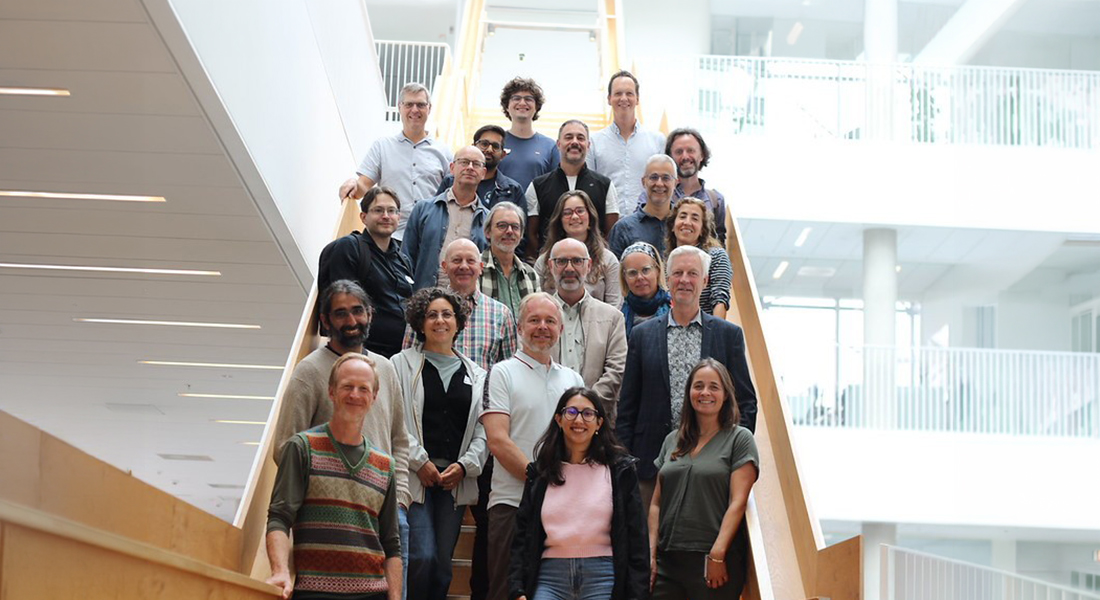
Peter Ditlevsen leads the new interdisciplinary EU project OceanNexus, which will investigate the consequences of changes in ocean systems and identify early warning signs of tipping points, so that there may be time to respond.
The project comes just a few years after Ditlevsen and his colleague sparked widespread international debate with their 2023 research into the risk of a collapse of the Atlantic Meridional Overturning Circulation (AMOC).
One of the challenges in researching ocean tipping points is the limited amount of long-term data available. But waiting for more data may not be an option, Peter Ditlevsen says.
We are constantly collecting more and better data. But we can only collect one year of data per year, so data collection may simply be too slow if we are to have time to respond to the risk of tipping,”
When changes in the ocean reach land
If major ocean currents change dramatically, it is not only a question of temperatures and marine biology. The consequences could extend to fisheries, economies and coastal communities that live by and depend on the ocean. Understanding these connections is at the heart of OceanNexus.
Over the next four years, Peter Ditlevsen and colleagues across Europe will investigate early warning signs of tipping points and explore the potential consequences that major changes in ocean systems could have for nature, society and people.
Among other things, the researchers will develop so-called integrated assessment models to describe the connections between the different parts of the system.
The aim is therefore not only to understand whether ocean systems can tip, but also what happens if they do, and what the consequences could be for people.
From knowledge to action
The ambition is to improve our ability to identify early warning signs of tipping points while gaining a better understanding of the consequences that major changes in ocean systems could have. But for OceanNexus, the work does not stop when new scientific results are produced.
“First and foremost, we want to help reduce the uncertainties in future projections of tipping points. But we also hope that a better fundamental understanding of the climate and biodiversity crises can provide more qualified advice to opinion leaders and decision-makers on climate, environmental and fisheries policy,” says Peter Ditlevsen.
OceanNexus places particular emphasis on translating new scientific knowledge into decisions and action. An entire work package dedicated to policy, governance and management will bring researchers together with relevant authorities and stakeholders to identify knowledge needs, develop concrete policy recommendations and create tools that can support decisions about the future of the ocean.
The aim is to bridge the gap between research and those who need to use it. From European policymakers to regional stakeholders and those responsible for managing marine areas.
Contact
Peter Ditlevsen
Professor
Niels Bohr Institute
University of Copenhagen
Mobile: +45 28 75 06 03
Email: pditlev@nbi.ku.dk
Nina Bendixen
Communications and Press
Niels Bohr Institute
University of Copenhagen
Mobile: +45 27 26 80 87
Email: n.bendixen@nbi.ku.dk