• Emnenavigation
  • Indhold
  • Footerlinks
Start Toggle navigation
  • Find vej
  • Find en medarbejder
  • Job
  • KUnet
  • English
  • Uddannelse på KU
    • Bachelor
    • Kandidat
    • Ph.d.-uddannelse
    • Efteruddannelse
    • Kursuskatalog
    • For skoler og gymnasier
  • Forskning på KU
    • Forskere og publikationer
    • Forskningscentre
  • Nyheder
    • Sommerferieoplevelser Sommerferieoplevelser
      07.06.2026
    • AfD dominerede TikTok i den tyske valgkamp AfD dominerede TikTok i den tyske valgkamp
      04.06.2026
    • Fra flad mos til skove og blomster: Nyt fund kan give svar på, hvordan planter kunne erobre landjorden Fra flad mos til skove og blomster: Nyt fund kan give svar på, hvordan planter kunne erobre landjorden
      02.06.2026
    • Alle nyheder
    • Presseservice
  • Innovation
  • Om KU
    • Strategi
    • Tal og fakta
    • Profil og historie
    • Samarbejde
    • Organisation
    • Fakulteter
    • Institutter
    • Museer og attraktioner
    • Biblioteker
    • Arrangementer
    • Alumni
    • Kontakt
Københavns Universitet
Niels Bohr Institutet

Niels Bohr Institutet

  • Om instituttet
  • Uddannelser
  • Forskning
  • Ansatte
  • Mød os
  • Ledige stillinger
  • NBI Biblioteket
  • Kontakt
  • sitmap
  • Niels Bohr Institutet
  • Hvem, Hvad, hvor
  • Inge Lehmann
  • 'P' eller opdagelsen af Jordens kerne
  • Notions of the Earth’s...

Notions of the Earth’s interior

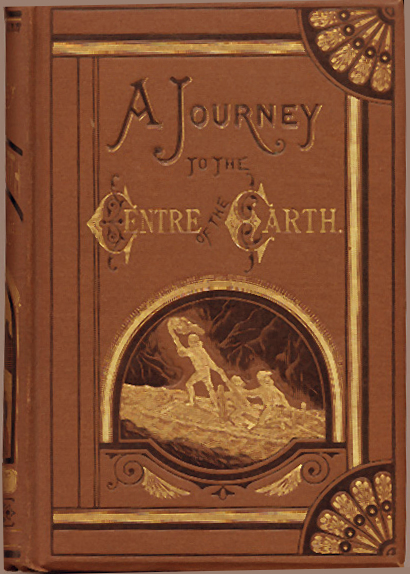
Book cover: A Journey to the Center of the Earth

Journey to the Centre of the Earth (1864) by Jules Verne finds a small group of scientists and adventurers heading into the Earth, where they discover living dinosaurs and a great sea, before they finally find their way back to the surface through the Stromboli volcano in southern Italy.  

But this is not the first time man has fantasised about a new world inside the Earth, like the English astronomer Edmund Halley, who in an article in 1694 suggested that the Earth was comprised of several hollow spheres within each other and that the internal planets might be inhabited.

The idea of a kind of underworld was also found in many places in ancient mythology and also in Christianity, where Dante Alghieri’s The Divine Comedy from the 14th century and John Milton’s Paradise Lost from 1667 helped shape the idea of a subterranean hell.

Today, the idea of the hollow Earth is only held by the most die-hard conspiracy theorists, such as ‘Doctor’ Walter Siegmeister, who, in his book Hollow Earth from 1964, explains the mystery of both UFOs and Atlantis based on the theory of a hollow, inhabited interior world.

Seen below is one of Édouard Rious illustrations for Jules Verne’s science fiction classic Journey to the Centre of the Earth (1864).
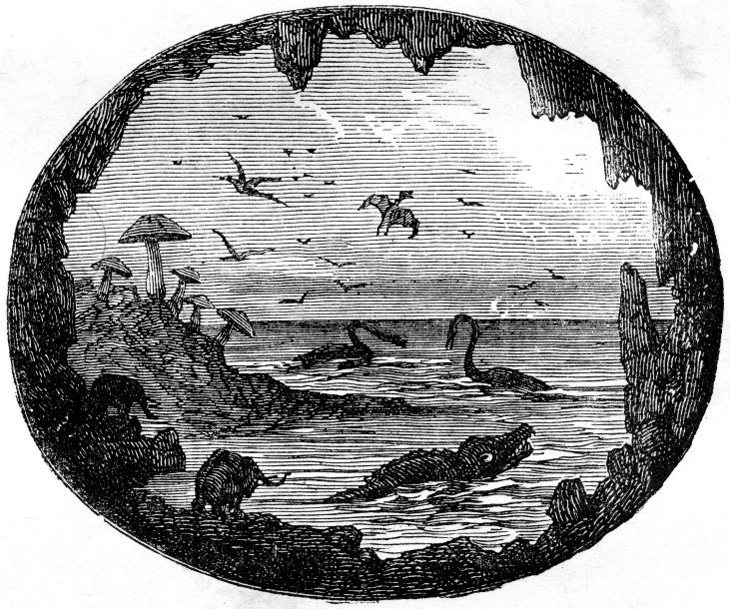
Illustration from "The Centre of the Earth"


Niels Bohr Institutet
Københavns Universitet
Jagtvej 155 A, 2200 København N.
Kontakt:
Niels Bohr Institutet
NBI@nbi.ku.dk
Tlf: +45 35 32 79 00

Københavns Universitet

  • Ledelse
  • Administration
  • Fakulteter
  • Institutter
  • Forskningscentre
  • Dyrehospitaler
  • Tandlægeskolen
  • Biblioteker
  • Museer og attraktioner

Kontakt

  • Find vej
  • Find en medarbejder
  • Kontakt KU

Services

  • Presseservice
  • Designguide
  • Merchandise
  • IT-support
  • Til leverandører

For studerende og ansatte

  • KUnet

Job og karriere

  • Ledige stillinger
  • Jobbank for studerende
  • Alumne

Nødsituationer

  • KU's sikkerhedsberedskab

Web

  • Om websitet
  • Cookies og privatlivspolitik
  • Tilgængelighedserklæring
  • Informationssikkerhed

Mød KU på