
Niels Bohr Lecture by Monika Aidelsburger, University Munich
Quantum simulation – Engineering & understanding quantum systems atom-by-atom
Abstract
Quantum simulation provides new insights into the complex properties of quantum many-body systems in regimes that are not accessible with state-of-the-art classical numerical methods.
In this talk, I will introduce quantum simulators based on ultracold atoms in optical lattices, where control at the level of individual particles can now be achieved in systems of several thousand atoms. I will discuss how these platforms enable the exploration of topological phases of matter and their interplay with interactions and disorder.
Building on these capabilities, we have recently realized non-equilibrium U(1) quantum spin liquids of Rokhsar–Kivelson type, establishing a direct connection to lattice gauge theories.
Finally, I will highlight recent experimental advances that provide new ways to prepare and probe complex quantum states, opening routes to strongly correlated and out-of-equilibrium many-body physics, where neutral-atom platforms not only emulate but are increasingly enabling the discovery of new quantum phenomena.
Bio
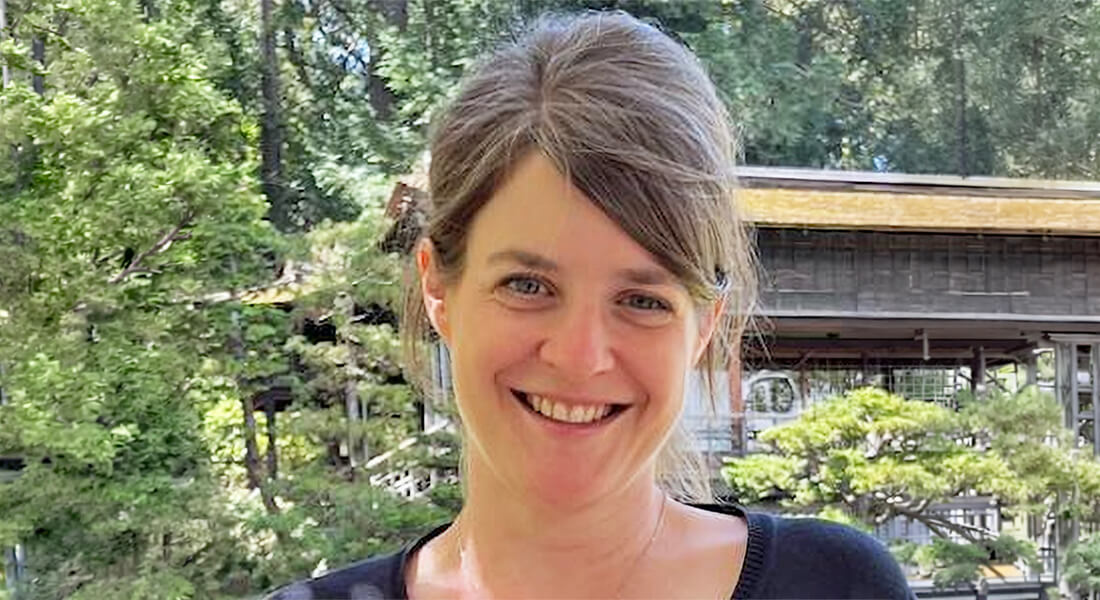
Monika Aidelsburger is Professor of Synthetic Quantum Matter at Ludwig Maximilian University Munich and head of a research group on Engineered Quantum Systems at the Max Planck Institute for Quantum Optics in Garching. She received her PhD summa cum laude from LMU Munich in 2015 and subsequently held postdoctoral positions in Munich and at the Collège de France in Paris, where she worked with Jean Dalibard on homogeneous Bose gases. She was appointed to professorship in 2019, supported by an ERC Starting Grant on synthetic quantum matter.
Her research sits at the intersection of quantum simulation and many-body physics, using ultracold atoms in optical lattices as highly controllable platforms to probe out-of-equilibrium dynamics, topological phases, and lattice gauge theories coupled to fermionic matter. Her experiments realise paradigmatic models such as the Haldane model and the Hofstadter butterfly, and explore phenomena including many-body localisation and Hilbert space fragmentation.
She has received many awards for her contributions to science including the Alfried Krupp Prize for Young University Teachers and the Klung-Wilhelmy Science Prize (both 2021), and is a member of acatech, the German Academy of Science and Engineering.